1. Historical Background

    During the 50’s and 60’s, Taiwanese Buddhism was inconceivable to most people. The essence of Buddhism was contained in an extremely profound, subtle but seldom read collection of writings know as the Tripitaka. Buddhist temples were thought by most people to be shelters for those who were either unsuccessful in life or social outcasts such as the elderly, sick, disabled or those abandoned by their families.

    At this time most people could not distinguish the Buddha from other gods that were also worshiped. The fully perfected and enlightened being (the Buddha) was seen as only another god who should receive the same offerings as other gods and who in return would provide blessings and protection to those who worshiped faithfully..

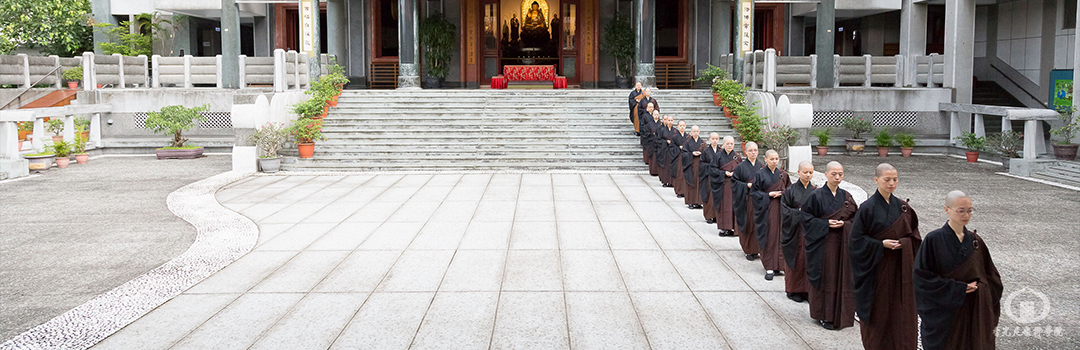
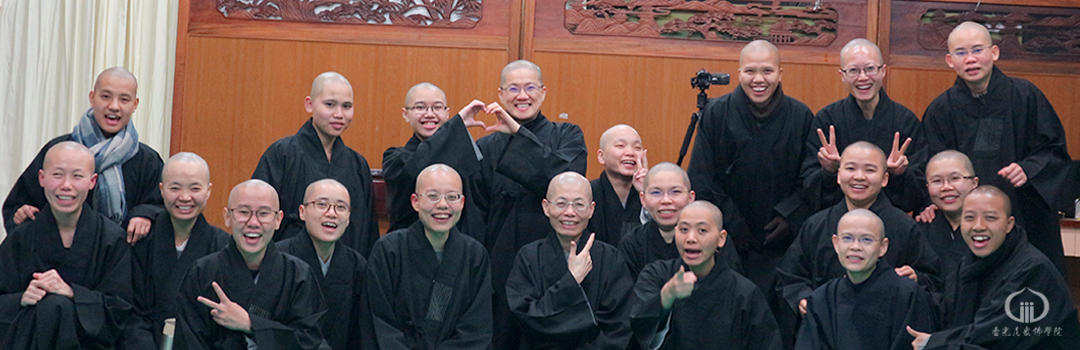
    Venerable Wu Yin, founder and principal of the Luminary Buddhist Institute, believes that a good education should be more than just the transmission of Buddhist doctrines. An education that opens and raises the students’ intellectual horizons along with the application and integration of learning in a religious community environment greatly increases the depth and understanding of the student.

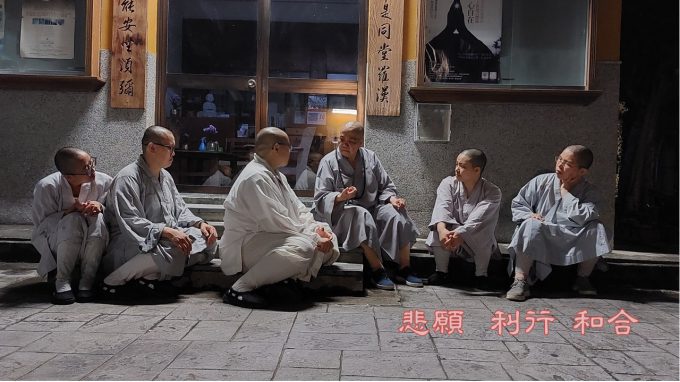
    Through real life experience such as working with other religious practitioners, maintaining daily prayer and religious practices, meditation and interacting with people of all walks in society; one learns to strengthen their commitment of becoming a spiritual guide to all beings.

    In short the educational rationale of the Institute is to bring up wholesome monastics who have developed all the necessary qualities to be spiritual leaders. Since it’s establishment in 1970, the Luminary Buddhist Institute has been dedicated to educating such spiritual leaders.

2. Recruitment of Students

    Sramanerika or Bhiksuni between the ages of 18 to 35 who have completed High School or the equivalent.

3. Educational System

    The Institutes curriculum is divided into two sections, which require five years to complete. The two sections are titled ‘Basic’ and ‘Advanced’ curriculum respectively.

    The ‘Basic’ curriculum course includes study of the Sutras, Vinaya and various Commentaries which comprise the ‘core curriculum’ for monastics.

    The ‘Basic’ curriculum requires three years to complete. The students’ primary focus is to become familiar with the fundamental theory of Buddhism, to gain a basic knowledge and understanding about monastery matters, to strengthen their spiritual commitment and to adjust to living in a religious community.

    The ‘Advanced’ curriculum focuses on a more in depth examination of the subjects covered in the Basic course.

    The Advanced section requires two years to complete. Students focus their learning on topics they have interest in that they studied in the ‘Basic’ curriculum. In addition the student may include subjects that are related to current events in the Buddhist community such as administration, education, translation, publication, Dharma-propagation and so forth. Based upon their interest and strength, students can engage in-depth study of subjects of interest to them.

4. Curricula Design

       The curriculum is divided into five categories; 1) Intellectual Studies, 
       2)Practice, 3) Community Life Training, 4) Monastery Administration and 
       5) Dharma Education.

Intellectual Studies

Studies in this category include Buddhist philosophy, discipline and morality, Buddhist history, Sangha studies and other courses in the humanities and social sciences.

Courses in Buddhist philosophical include the ‘Diamond Sutra’, ‘Lotus Sutra’, ‘30 Verses of the Mind Only School’, ‘Commentary on the Mahayana’, commentaries on the ‘Middle Way’, ‘The Path of Purification’, to ‘Stages of the Path To Enlightenment’.

Courses in Discipline and morality studies include Sramanarika precepts, Bodhisattva Vows, and Bhiksuni precepts. Courses in Buddhist history and Sangha system include; Chinese Buddhist History, Indian Buddhist History, and Sangha system analysis.

Courses in the humanities and social sciences include modern languages, calligraphy, and writing. Occasionally, courses or seminars will be offered by visiting scholars. The topics of these seminars may range from sociology and philosophy to comparative religion, psychology, history, and Buddhist art.

Practice

      Daily Programs:
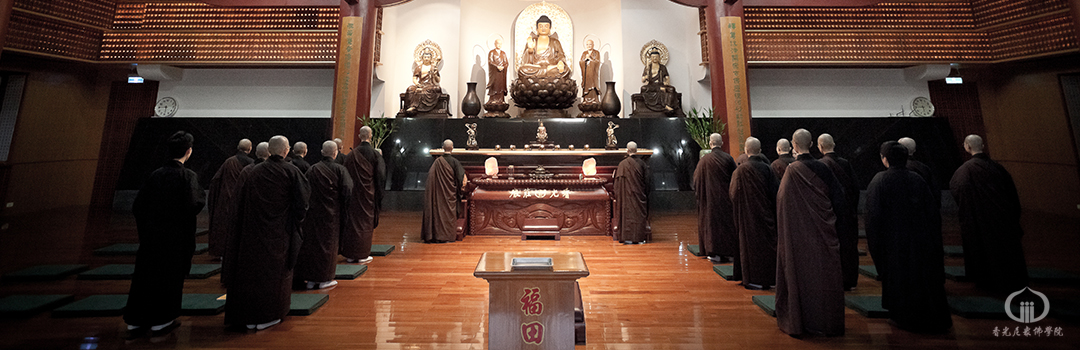
    1. Morning and evening prayers, meditation sessions, meal rituals (Guo Tang)
      Weekly Programs:

      1.   Recitation of the precepts

      Intensive Programs:
    1. Intensive meditation retreats, personal retreats, and the Rains Retreat.

Community Life Training

      Disciplinary focus:
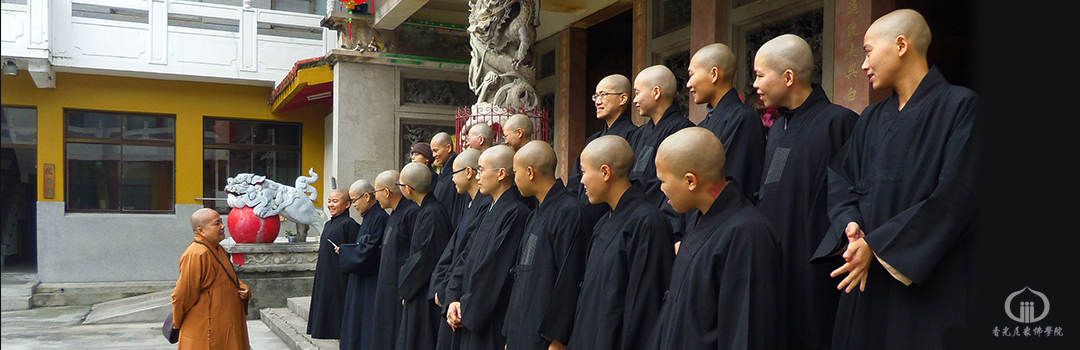
    1. Students learn to follow the Rules of the Institute, abide by it’s code of conduct, follow timetables and schedules and establish good habits and etiquette. The Institutes faculty serves as an excellent example and role model to help remind students what proper deportment and discipline are.
      Counseling focus:
    1. To distinguish the difference between monastic and lay lifestyles. To help students recognize and establish their own identity and to live harmoniously with other practitioners. To learn to study and to take care of monastery affairs effectively.

Monastery Administration

     Daily chores:
    1. Assigned work on the Kitchen Team, Laundry Team,
      Buddha Hall care Team or the Custodial Team.
     Intern Jobs:
    1. Assigned work as assistant teachers, equipment managers, team leaders, administration assistants, assistant editors, assistant translators or assistant librarians.

Dharma Education

    Internal activity in the Institute:
               
Zen retreat, Rains Retreat, Seminars, and special ceremonies.
    In other Buddhist centers:

    1. To give regular Dharma instruction in the community, to design and implement special projects and programs, to help organize ceremonies such as taking Refuge and Precepts, or arrange a summer camp.


5. Faculty

    The Institute faculty is composed of senior Bhiksunis of the Luminary International Buddhist Society, college professors, professionals form the community and experts in the Buddhist field. At the present time the Institute faculty includes 8 full time and 14 part-time instructors.


6. Prospect

Teaching and learning:

     1.   To research and develop teaching methods, design and publish the
           course material.

     2.   Careful examination of the student’s talents and interests to help develop
            them to their full potential.

Counseling and Guidance:

          To assist students in developing their career plan so that course work and
          practical learning experiences will have a direct application in accord with
          the student’s career choice.

Long-term Prospect:

         To become a center where Bhiksuni’s can find and use resources relevant
          to they’re life-long development goals.


Contact Information:

Luminary Buddhist Institute

49-1 Hsiychou, Nei-pu Chu-Chi,

Chia-I Hsien, 604 Taiwan

R.O.C.

Tel: 886-5-2540359

Fax: 886-5-2543213

E-mail: hkbi@gaya.org.tw

Web site: http://www.gaya.org.tw/hkbi